Managing operational variability in primary produce processing – Part 2 of 3
In Part 1, we explored why planning in primary produce processors is influenced by changing yields, seasonal supply, commodity pricing, and production outcomes that do not always follow predictable patterns. Once production begins, those planning assumptions meet operational reality.
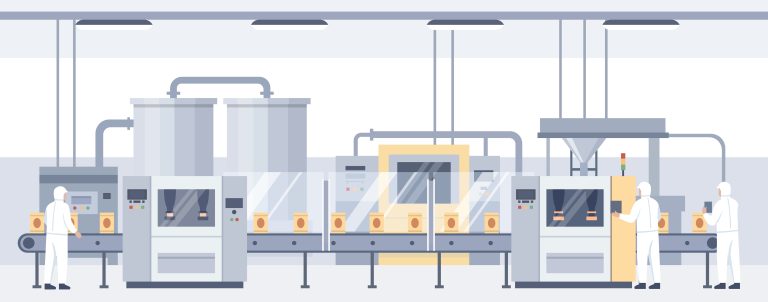
Product starts moving through tanks, silos, hoppers, blenders, dryers, conveyors, packing lines, and storage locations. Quantities change. Yields become apparent. Grades are confirmed. Estimates that were made during planning are progressively refined by actual production information.
The challenge is maintaining visibility, traceability, and operational control while production continues to flow. This article examines why that can be difficult in primary produce processing environments and why traceability is fundamentally an operational requirement, not simply a compliance obligation.
Production doesn’t wait for perfect information
Many manufacturing environments process work in discrete batches that can be counted, labelled, scanned, and tracked at defined stages.
Primary produce operations often work differently.
Large product volumes may move continuously through receiving, storage, processing, drying, blending, packing, and dispatch. Material may be moving through multiple locations while quantities are still being confirmed, quality results are still being assessed, and final yields and grades are still being determined.
Operational decisions still need to be made while information is incomplete. Teams may need to revise how material should be processed, blended, graded, or tested as more information becomes available.
One input can create many outputs
In reverse manufacturing environments, a single raw material input can generate multiple outputs, grades, by-products, and yields. In continuous-flow processing environments, those outputs, grades, and yields can change throughout production as materials are blended, separated, concentrated, dried, graded, or transformed into different products.
A single production run may generate multiple grades of product with different commercial values. As processing continues, one intake may be separated into multiple product streams, each with its own quantity, grade, quality status, inventory position, and production history.
Unlike traditional manufacturing environments, where the intended output is often known before production begins, primary produce processors may not know final quantities, grades, yields, or product classifications until processing is complete.
At the same time, product identity and history must still be maintained as inventory is split, combined, transformed, and reclassified throughout production. Traceability must be maintained throughout blending, separation, grading, drying, transformation, and reclassification activities.
Quantities change as product moves
One reality of many primary produce processing operations is that the quantity entering a process is not always the quantity leaving it.
Moisture may be removed during drying. Product may be concentrated. Material may be separated into different grades. Multiple lots may be blended. Testing may result in reclassification. Yield gains and losses can occur throughout processing.
In these environments, inventory is not merely moving from one location to another. It is changing form, quantity, grade, and sometimes value as it moves through production. Most of those changes are expected outcomes of the processing activities themselves.
The challenge is maintaining traceability through those changes so businesses can understand what inventory originated from, how it has been transformed, and what it has become.
Traceability supports operational continuity
Traceability is often discussed in the context of audits, compliance requirements, and product recalls. Those requirements remain important. But for many primary produce processors, batch traceability information also supports day-to-day decision-making.
Teams rely on batch information in business processes that deal with:
- Inventory availability
- Testing, quality status and release readiness
- Batch and lot history
- Inventory allocation decisions
- Export eligibility
- Planning the next stage of processing
When information is incomplete or difficult to verify, decisions become harder to make with confidence. Questions that should be straightforward may require additional investigation before action can be taken.
The value of batch traceability information extends beyond compliance requirements. It also supports day-to-day operational decisions throughout production, inventory, quality, export, and planning processes.
Complexity increases as operations grow
As primary produce processors expand, product movement typically becomes more complex. Raw materials may arrive at one site, be processed at another, stored elsewhere, and transferred again before packing, distribution, or export. Production may continue across multiple shifts and extended operating hours.
Every movement, transformation, blend, transfer, and quality decision increases the amount of information that must remain connected.
A transfer that is not recorded correctly can create inventory uncertainty. Missing production information can affect quality decisions. Incomplete batch history can make allocation, customer enquiries, export validation, or investigations more difficult.
Collectively, these activities increase the amount of information that must be managed and maintained throughout production. As operations grow, maintaining visibility and traceability becomes increasingly dependent on having accurate and connected information across production, inventory, quality, and logistics activities.
Connected information supports production flow
For primary produce processors, ERP systems need to support production activities while maintaining visibility, traceability, and operational control.
Product movement, yield information, batch history, quality status, location changes, allocations, and compliance requirements should be connected to operational processes rather than managed separately.
When information remains connected, businesses are better positioned to make operational decisions using current production information rather than relying on retrospective investigation or manual reconciliation.
How Abel supports traceability and operational control
Abel ERP helps primary and natural products processors connect production, inventory, warehousing, quality processes, traceability, logistics, and finance within a single operational environment.
By bringing operational information together, Abel helps businesses maintain visibility across product movement, changing inventory positions, production activity, yield outcomes, quality processes, customer commitments, and compliance requirements.
For businesses operating continuous-flow and reverse-manufacturing environments, that connected view helps support operational control without interrupting production flow.
Continue the series
In Part 3, we’ll explore what happens once production outcomes are known and how businesses manage inventory allocation, customer commitments, export requirements, shipment readiness, and the journey from processing facility to final market.
Learn more
Talk to us about how Abel ERP helps primary produce processors maintain accurate batch information as inventory is transformed, reclassified, and processed, supporting production, quality, inventory, and planning decisions throughout processing operations.