Part 3 of Abel’s Integration and Automation Series
A day in a connected business
In the first article, we explored why many businesses still experience operational friction despite investing in ERP systems and other technologies. In the second, we looked at how businesses can identify opportunities, prioritise initiatives, and build a practical integration and automation roadmap. The natural next question is: what does success look like in daily operations?
While every business’s journey is different, those that gain the greatest value from integration and automation often share similar characteristics. Information flows more freely, departments use consistent operational data, and staff spend less time coordinating processes manually. Information becomes available where it is needed rather than remaining isolated within individual systems.
This article explores what that future state can look like when ERP integration, automation, and connected operations support the way people work every day.
Before the day begins
One of the first signs of a connected business is that work continues to move even when people are not actively managing it.
Before teams begin their workday, customer orders received through websites, trading partners, sales teams, or retail channels are already flowing into the ERP system. Inventory requirements become visible earlier, demand can be assessed more quickly, and warehouse and production activities can be planned, using current information rather than yesterday’s data.
Managers often describe this as a shift from chasing information to starting the day with a clearer understanding of what is happening across the business.
When operations can respond in real time
In many businesses, warehouse activity sits at the centre of daily operations. When information is disconnected, warehouse teams often spend valuable time clarifying priorities, waiting for instructions, or resolving inventory discrepancies. In a connected environment, those delays become less common because operational data is available when it is needed and reflects current activity.
Orders, inventory movements, receipts, picks, and despatches are visible as they occur. Staff work from current priorities rather than static lists. Barcode scanning and mobile technologies help ensure inventory information is current, giving both operational teams and management greater confidence in the data they are using.
The result is not simply a more efficient warehouse, but one that becomes a more active participant in the flow of information and operational decision-making throughout the business.
When production becomes part of the conversation
Manufacturing environments often face a similar challenge. The information needed to make good decisions may exist, but it is not always available at the point it is required. Production activity is sometimes captured after the fact, limiting visibility and reducing the business’s ability to respond quickly to changing circumstances.
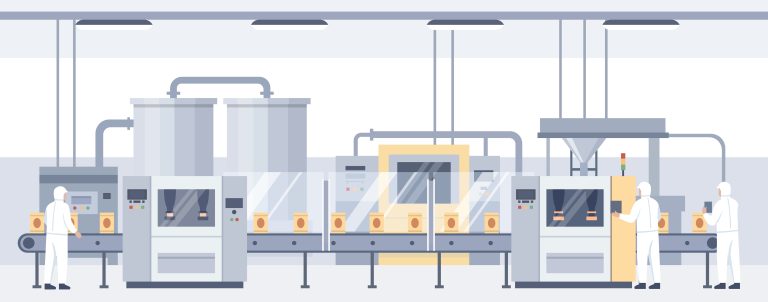
As manufacturing processes become more connected, production activity becomes visible in real time. Material consumption, labour usage, production progress, quality and traceability data can be captured as part of normal operations rather than through separate administrative processes.
This creates benefits far beyond the factory floor. Demand signals from sales, inventory information from warehousing, purchasing activity, and production planning become more closely aligned, helping the business respond more effectively to customer requirements, supply constraints and changing operational conditions.
When compliance and quality are part of the process
For many manufacturers, distributors, and food producers, compliance and traceability are not optional.
Historically, meeting these requirements often involved significant manual record keeping and administrative effort. As businesses improve process integration, quality and compliance activities can become part of everyday workflows rather than separate tasks performed after the event.
Batch information, production data, material validation, quality checks, and customer-specific requirements can be captured as work takes place. When information is required for reporting, auditing, or investigation purposes, it is more accurate and more readily available because it has been collected throughout the process rather than reconstructed afterwards.
In many cases, improving compliance processes also improves operational visibility and efficiency.
When the supply chain feels more manageable
One of the most noticeable changes in a connected business is improved visibility across the supply chain.
Questions that once required multiple phone calls, emails, or spreadsheet reviews can often be answered much more quickly because the data is already in the ERP system. Information about local inventory, overseas stock, incoming shipments, and expected arrival dates becomes easier to access because it is no longer spread across multiple disconnected sources.
This level of visibility supports better planning, more informed purchasing decisions, and greater confidence when responding to customer enquiries. The supply chain does not necessarily become simpler, but it does become more manageable.
When finance and operations use the same information
One of the most important characteristics of connected businesses is that operational and financial information remain aligned. When departments operate from separate sources of information, reporting often becomes an exercise in reconciliation. Teams spend time determining which numbers are correct rather than discussing what those numbers mean.
In connected environments, finance teams gain a broader view across operational activity, while operational managers have access to relevant financial information to support more informed decision-making. Supplier invoices, inventory movements, production activity, sales transactions, and financial performance become part of a broader operational picture. As a result, management conversations can focus less on gathering data and more on interpreting it.
When management can focus on decisions
A significant benefit of connected operations is the impact on management.
Many managers spend a significant portion of their time collecting information, validating updates, and resolving uncertainty. As visibility improves, more time can be directed toward planning, prioritisation, customer service, growth opportunities, and continuous improvement.
Performance measures become easier to review. Trends become easier to identify. Exceptions become easier to investigate. Rather than waiting for reports to be assembled, managers gain access to information while meaningful action can still be taken. This is often where the value of integration and automation becomes most apparent.
The objective was never simply to process transactions faster, but to help people make better decisions.
The Abel perspective
Over the years, Abel has worked with businesses at many different stages of their integration and automation journey. While technologies vary between industries and businesses, the most successful projects focus on improving the flow of information across the business rather than treating integration and automation as a collection of disconnected technology projects.
Whether the opportunity involves warehousing, manufacturing, logistics, finance, compliance, business intelligence, or ERP integration, the goal remains the same. Information should be available where and when it is needed, processes should support operational objectives, and staff should spend more time creating value and less time managing data flows manually.
Abel’s role is not simply to provide software but to help businesses understand how systems, processes, people, and technology can work together to support long-term operational improvement.
Looking ahead
A connected business is not the end of the journey. In many ways, it is the beginning of a new one.
As businesses improve the quality, availability, and visibility of operational information, new opportunities emerge. Business intelligence becomes more valuable. Forecasting improves. Performance measurement becomes more meaningful. Artificial intelligence and advanced analytics become easier to apply because the underlying information is already connected and accessible.
Integration and automation deliver the greatest value when they build the foundations for better visibility, better decisions, and continuous improvement. As technologies, business requirements, and integration opportunities continue to evolve, businesses with strong information and process foundations are often better positioned to adapt, connect new systems, and take advantage of emerging opportunities. That is what a connected business ultimately makes possible.